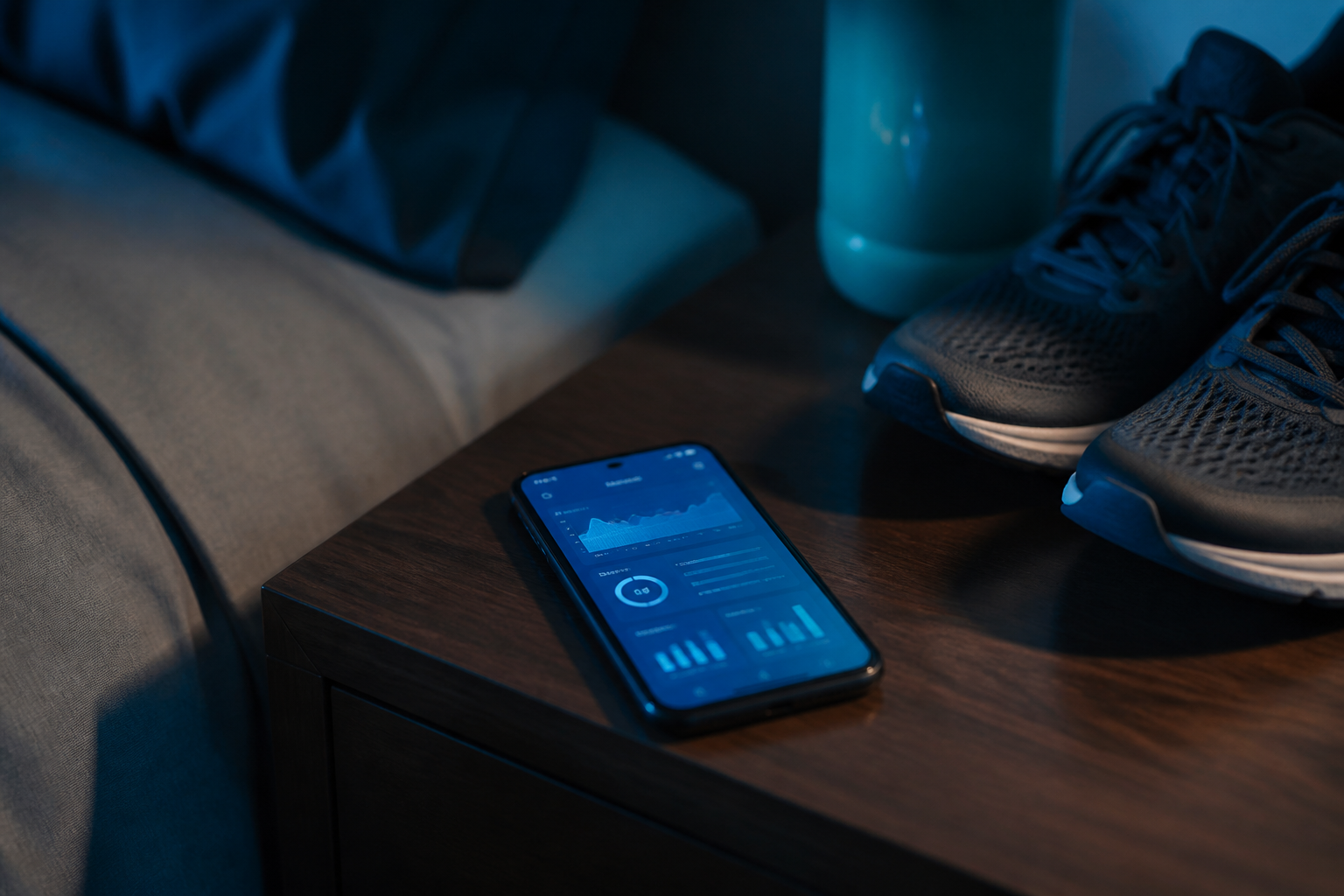
The work of improving health happens mostly between appointments. Precision Health uses SyncoSystem as a supporting digital layer so patients can access the connected experience available to them without turning technology into the treatment itself. The physician-patient relationship remains central; software helps organize the work around it.
Why the space between visits matters
A plan that sounded clear in the office can meet real-life friction: a new symptom, schedule disruption, missed meal, medication question, or uncertainty about the next step. Good care anticipates those moments. Digital access can reduce lost instructions and help patients arrive at follow-up with better questions.
Technology should be quiet
A health platform should not demand constant attention or manufacture anxiety. It should make relevant information easier to find, support communication through approved channels, and preserve a coherent record. It should never imply that an automated prompt has replaced clinician judgment.
What patients remain responsible for
Digital convenience does not change emergency boundaries. Chest pain, severe shortness of breath, fainting, signs of stroke, severe allergic symptoms, or other emergencies require immediate emergency evaluation—not a portal message. Patients should also verify which communication channel the practice uses for urgent, same-day, and routine concerns.
Privacy and good digital habits
Use a strong unique password, protect the device used to access health information, sign out on shared computers, and confirm you are on the correct domain before entering credentials. Do not send another person’s health information through your account. Ask the team if you are uncertain how a feature should be used.
A tool, not a rebrand
Precision Health remains a physician-led Atlanta practice. SyncoSystem supports parts of the connected experience; it does not change who is providing care or promise that every possible platform feature is part of every patient’s plan. Patients with access can sign in at syncosystem.com/login.
How I turn information into a treatment decision
I begin by separating three questions that are often blended together. First, is there a symptom or risk that needs prompt medical attention? Second, what information would genuinely change the plan? Third, what can the patient reasonably carry out between now and follow-up? This prevents us from ordering tests simply because they are available or adding treatment because it sounds impressive.
The baseline is broader than a scale reading or one laboratory value. I want to understand medicines and supplements, allergies, prior diagnoses, family history, sleep, work demands, food access, activity, pain, alcohol and tobacco exposure, stress, and what happened with previous plans. For medication-related care, reproductive goals and relevant contraindications must be explicit. Patients should bring records they already have; repeating a recent, reliable test without a reason adds cost but not necessarily clarity.
What meaningful progress looks like
Progress should match the purpose of care. Depending on the problem, we may follow symptoms, home measurements, laboratory trends, strength, walking tolerance, sleep quality, medication adherence, meal consistency, or the ability to perform ordinary activities. Body weight can be useful, but day-to-day changes include fluid, food, and normal variation. A single reading should not control the emotional tone of the week.
I also ask what the plan costs in time, money, attention, and side effects. A technically effective intervention is not sustainable if the patient cannot afford it, cannot tolerate it, or must reorganize life around it. Shared decision-making does not mean that every requested option is medically appropriate. It means the clinician explains reasonable choices, uncertainties, benefits, burdens, and why a requested option may be unsafe or unhelpful.
Prepare for follow-up before you leave
Every plan should answer: What do I do next? What should I track? When do we review it? Which symptoms should prompt an earlier call? What counts as an emergency? Patients should know whether a message channel is for routine questions or same-day needs. A portal is not an emergency service, and a scheduled visit should not delay urgent evaluation.
For routine follow-up, bring a brief, honest account rather than a perfect diary. Note missed doses, side effects, appetite or sleep changes, barriers, and questions. If you use a home device, record how and when measurements were taken. Do not hide a problem because you worry it will disappoint the clinician. Unexpected information is often the information that makes care safer.
Why maintenance belongs in the first conversation
Many health plans are built around starting and almost silent about sustaining. I prefer to discuss maintenance early. What would make the new routine survive travel, illness, a demanding season at work, or a plateau? Which parts require ongoing clinical monitoring? If a medicine later changes, what nutrition, movement, sleep, and follow-up structure remains?
Maintenance is not a lesser phase. It is where a useful intervention becomes part of a durable life. We should expect plans to need adjustment as health, goals, access, and circumstances change. The standard is not perfection. The standard is a plan that remains medically sound, understandable, and recoverable after an imperfect week.
A physician’s bottom line
Good care is specific enough to act on and humble enough to change when new information appears. I want patients to understand what we know, what remains uncertain, what the next step costs, and which symptoms should change the plan. Marketing language should never outrun clinical evidence.
Precision Health has one physical office at 2751 Buford Hwy, Suite 290, Atlanta, GA 30324. Telehealth is available to Georgia residents when clinically appropriate. Membership and medication are available only after a physician determines eligibility; not everyone qualifies. If medication is discussed, the physician determines what is clinically appropriate and works with reputable pharmacies after evaluation.
Frequently asked questions
Does SyncoSystem replace appointments?
No. It supports care around visits; examination, diagnosis, and treatment decisions still occur with clinicians.
Should I send emergencies through the portal?
No. Use 911 or appropriate emergency services for emergencies.
Does every patient use every feature?
No. Available tools depend on the patient’s care and current practice workflow.
Where do I sign in?
Use https://syncosystem.com/login and verify the address before entering credentials.
What if I cannot access my account?
Contact the practice through its published contact channel rather than creating duplicate records.
This article is general education, not personal medical advice, a diagnosis, or a promise of results. Treatment decisions happen after clinician evaluation.
Book a Precision Health visit.
References

Dr. Kelvin Brown, MD, MPH
Ready to Take the Next Step?
Book your free initial consultation and experience the difference that real physician care makes.